
Integration: Getting the Most Out of Your Infusions


The infusion is only part of the story. What you do afterward — integration — may be where a lot of the lasting change happens.
It’s tempting to think of ketamine as a medication you simply receive. But a growing view in the field is that the hours, days, and weeks after a session — a process often called integration — are where insights get turned into real, durable change.
What integration means
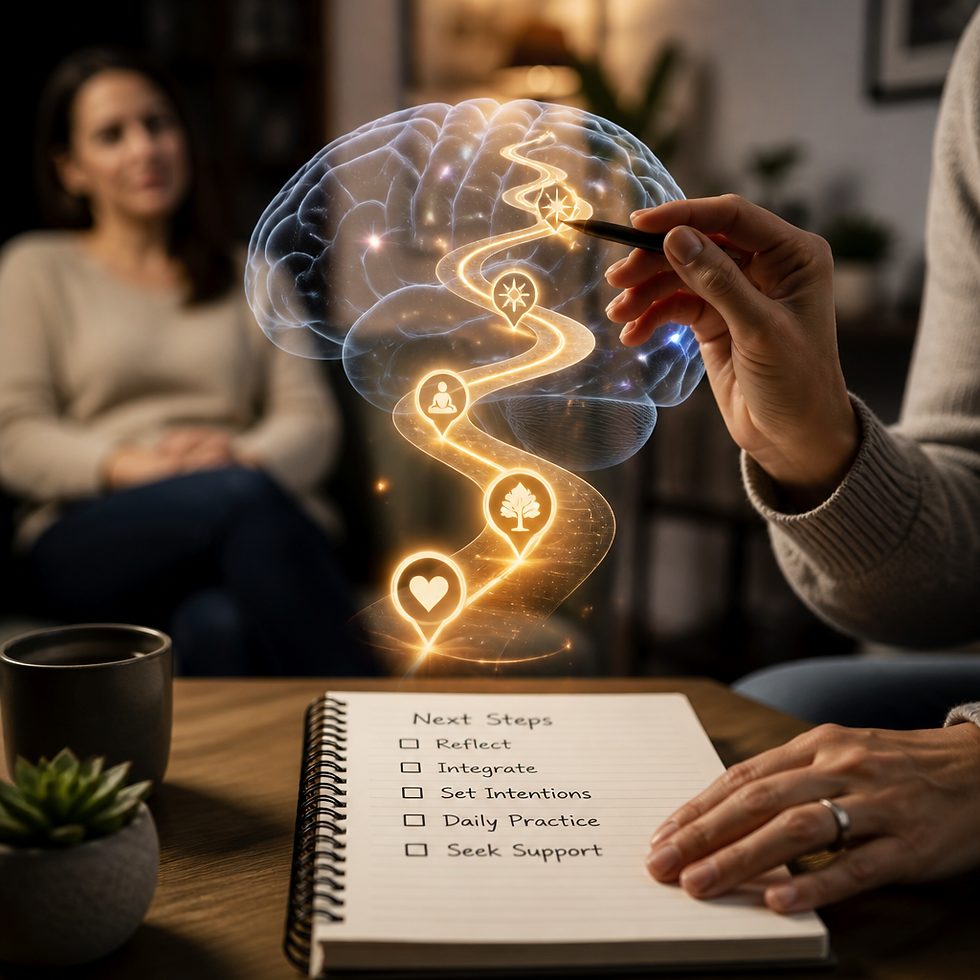
Integration is the work of making sense of your experience and weaving it into daily life. Ketamine appears to open a window of increased neuroplasticity — a period when the brain is more flexible and open to forming new patterns. Integration is how you use that window on purpose, rather than letting it close unremarked.
Why it matters
Research pairing ketamine with psychological support has found large and notably sustained improvements in severe depression, with the quality of the experience relating to the benefit. The takeaway isn’t that the drug alone transforms you — it’s that the combination of the medicine and intentional reflection or therapy can be more powerful than either alone.
Simple ways to integrate
Journal. Write down thoughts, images, or feelings from your sessions while they’re fresh.
Talk it through. Working with a therapist — ideally one familiar with this kind of treatment — helps translate insight into change.
Move gently and rest. Time in nature, light movement, and good sleep support the process.
Protect the space. Give yourself some quiet after sessions instead of rushing back into noise and obligation.
The bottom line
Think of your infusions as opening a door, and integration as choosing to walk through it. Pairing treatment with reflection and support is one of the best ways to help the benefits last.
Curious whether this could be a fit for you? Refound Center offers clinician-led care in the North Denver to Fort Collins area. Reach out to schedule a consultation and we’ll talk through your history and options together.
Medical disclaimer
This article is for general educational purposes only and is not medical advice, diagnosis, or treatment. Ketamine therapy is not appropriate for everyone. Talk with a qualified clinician about your history, medications, and goals before starting any treatment. If you are in crisis or thinking about harming yourself, call or text 988 (the Suicide & Crisis Lifeline) in the U.S.
Sources & further reading (studies identified via PubMed):
Greenway KT, et al. The Music for Subanesthetic Infusions of Ketamine RCT: ketamine as a psychedelic treatment for refractory depression. British Journal of Psychiatry, 2025. https://doi.org/10.1192/bjp.2025.102


Comments